

Timing belt failure? Everything you need to know about causes, warning signs and when to replace
Timing belt failure? Learn how to prevent damage, recognize warning signs and replace your belt safely and efficiently.
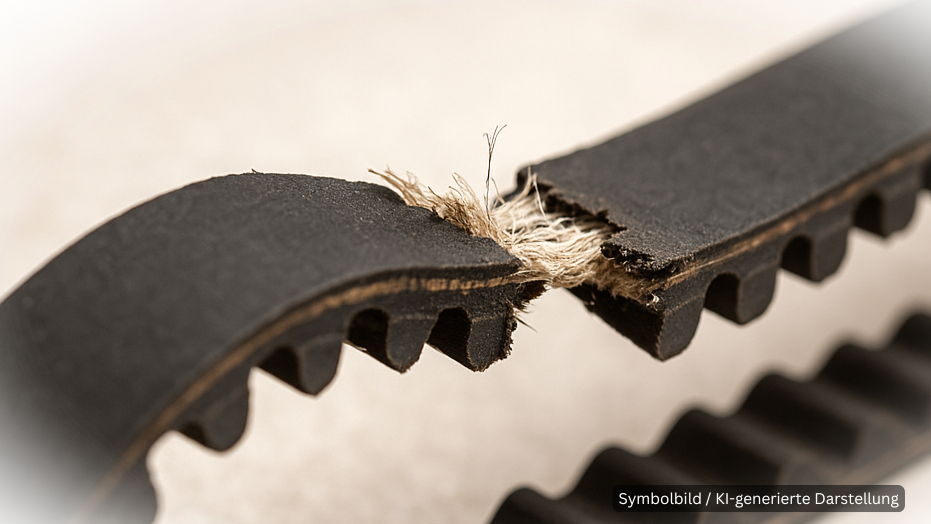
Timing belts play a crucial role in modern drive systems. They enable positive power transmission, slip-free drive, and extremely precise positioning tasks. But despite their outstanding strengths, timing belts are wear parts, and a torn belt can lead to significant disruptions and consequential damage.
This article highlights the main causes of timing belt failure, points out typical warning signs, and provides practical guidance on the right time to replace the belt—to prevent breakdowns, increase operational safety, and reduce unnecessary costs.
1. When the Timing Belt Breaks – Causes and Consequences
1.1 What Happens When the Belt Breaks?
A suddenly torn timing belt often leads to immediate machine stoppage. In automated systems, this can result in production downtime, missed deadlines, or in the worst case, expensive consequential damage to drive and downstream components. The situation becomes especially critical when positioning drives are affected. In such cases, the entire process chain is often interrupted. This applies in particular to high-dynamic applications such as pick-and-place machines, packaging lines, or robotic systems, where exact timing and millimeter-precise positioning are essential. A failure here can lead to considerable downtimes and costly production losses.
1.2 Typical Damage Patterns and Their Meaning
A torn timing belt is usually not the first sign of an impending failure. Instead, the defect is often preceded by a series of clearly recognizable preliminary damages. These include frayed edges, broken or deformed teeth, noticeable discoloration of the material, and worn spots on the tooth flanks or the back of the belt. Such changes clearly indicate progressive wear. If recognized in time and taken seriously, a sudden belt tear with all its consequences can usually be avoided.
2. Why Timing Belts Fail – The Most Common Causes
2.1 Material Fatigue and Aging
Even high-quality timing belts are subject to natural aging, which becomes noticeable over long operating periods. Typical external influences such as intense UV radiation, frequent temperature fluctuations, high humidity, or aggressive chemicals attack the material. Over time, this leads to brittleness of the tooth flanks, loss of elasticity of the belt back, or microcracks in the tension members. The result: the timing belt loses tension, flexibility, and resilience.
2.2 Incorrect Tension and Installation Errors
Insufficient pre-tension of the timing belt can lead to the belt skipping over the pulley teeth. This not only results in imprecise movements but can also damage the tooth flanks and pulleys. Conversely, too much tension means permanent mechanical overload of the tension members, which can lead to premature wear or tearing of individual components.
In addition, errors during installation—or even during storage—can have a negative impact on service life. These include twisting the belt, kinking the tension members, or incorrect running direction, especially with asymmetric tooth profiles. Such installation errors impair power transmission and often lead to uneven operation or increased noise levels.
2.3 Environmental Influences: Temperature, Oil, Dirt
In many industrial environments, extreme temperatures, oil mist, fine dust, abrasive particles, or chemical residues are commonplace. These can severely damage the timing belt through deposits, chemical reactions, or abrasive friction. The result is often accelerated material degradation, which appears as cracking, surface hardening, or tooth deformation. To prevent such premature wear, regular cleaning of all drive components is essential.
Even more critical, however, is the careful selection of the right timing belt. This involves not only choosing the correct tooth profile and considering mechanical load but above all, selecting the appropriate material and construction. The belt must withstand the specific environmental conditions such as temperature, humidity, chemical exposure, or abrasive dust. Timing belts made of special oil-resistant, heat-resistant, or chemically resistant materials are designed for such applications and ensure long-term, reliable performance. Only when material selection and design are optimally matched to the application can premature wear be effectively prevented.
3. Recognizing Warning Signs Early – How to Avoid Damage
3.1 Visual Inspection: What to Look For
Regular visual inspections are the simplest preventive measure. Look out for:
- Cracks on the belt back or teeth
- Frayed edges
- Shiny spots or discoloration due to friction
3.2 Acoustic Warning Signs: Operating Noise and Vibrations
Unusual noises such as rattling, whistling, or metallic clicking are often the first acoustic signs of mechanical irregularities in the timing belt drive. These sounds can indicate tooth skipping, which occurs when the belt no longer engages correctly with the pulley—usually due to insufficient tension or advanced wear. Misalignment of drive components can also cause increased friction and associated noise. Increasing vibrations, especially at constant speed, indicate imbalance in belt operation or damaged tooth structure. These signals should be taken seriously and checked promptly to prevent major damage.
3.3 Loss of Performance and Precision in Operation
Reduced torque, inaccurate positioning, or increasingly unstable operation often indicate a deterioration in power transmission. Such symptoms may be caused by slippage, for example, if the belt no longer meshes precisely with the pulley due to insufficient tension or worn teeth. Advanced wear or damage to the tooth flanks also impairs the precise transmission of movement and force. Ignoring these signs can lead to product defects, cycle deviations, and ultimately complete drive failure.
3.4 When to Replace the Timing Belt
At the latest, replacement is essential when visible cracks, tooth damage, or deformations are present. Better yet: plan a preventive replacement based on manufacturer recommendations or internal maintenance schedules.
4. Proper Timing Belt Replacement – Safe, Efficient, Durable
4.1 Preparation: Finding the Right Spare Part
Pay attention to the exact pitch, profile (e.g. AT, T, HTD), correct belt length, and the tension member material. Equally important is ensuring that the selected belt material is suited to the specific environmental conditions. Materials designed for very high or low temperatures, oil-, chemical- or UV-resistant variants, or antistatic versions should be considered as needed. Only when timing belt and operating conditions match can long-lasting and low-wear performance be achieved.
4.2 Step-by-Step Replacement Instructions
- Switch off and secure the machine
- Release and remove the timing belt
- Clean pulleys and check for wear or damage
- Fit new belt without tension
- Correctly set pre-tension using a gauge
- Test run with visual and acoustic check
4.3 Correct Tensioning and Retensioning
The correct tension is essential for belt life and smooth operation. It should be checked and, if necessary, readjusted after a few operating hours.
4.4 Typical Mistakes When Replacing Timing Belts
Common mistakes include:
- Improper storage, e.g. kinked, in damp environments, under strong sunlight
- Confusion of belt profiles
- Incorrect running direction for asymmetric profiles
- Twisting or bending the belt
- Using tools with sharp edges during installation
- Not observing the recommended pre-tension and failing to readjust after break-in
- Using unsuitable belts for specific environmental conditions (e.g. oil, heat, chemicals)
Conclusion: Timing Belt Replacement is Preventive Maintenance, Not Emergency Response
A torn timing belt rarely comes as a surprise. Those who know the warning signs, avoid root causes, and plan the replacement professionally save costs, increase operational reliability, and extend the service life of the entire drive system.